SpaceX Launches Blue Ghost-1 and Hakuto-R2 Lunar Landers
News Synopsis
Early Wednesday marked the beginning of a new year of lunar exploration as SpaceX successfully launched two robotic landers and a small rover on separate missions to the moon. The liftoff took place at 1:11 a.m. ET from NASA’s Kennedy Space Center in Florida, setting these missions on their way to the lunar surface.
Launch of Two Uncrewed Missions to the Moon
The SpaceX Falcon rocket launched two distinct, uncrewed lunar missions. Each mission aims to land a lander on the moon's surface with distinct scientific goals and objectives. One mission, developed by Texas-based Firefly Aerospace, is focused on landing its Blue Ghost lander in the Mare Crisium region of the moon. The second mission, operated by the Japanese company ispace, involves a lander named Resilience and a small rover called Tenacious, aiming for a landing in the Mare Frigoris region, located in the moon's far northern region.
Blue Ghost Mission by Firefly Aerospace
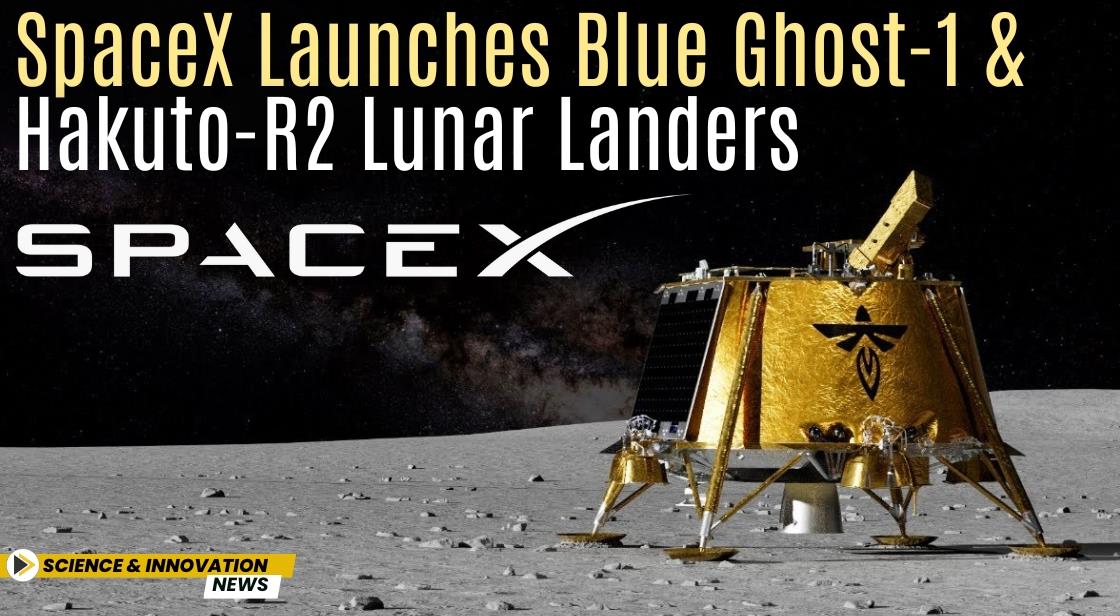
Firefly Aerospace's Blue Ghost lander is set to land in the Mare Crisium, a 340-mile-wide basin believed to have been formed by an ancient asteroid impact. This mission, which is part of NASA’s Commercial Lunar Payload Services initiative, carries 10 NASA science instruments. The goal of Blue Ghost is to spend about two weeks on the lunar surface, gathering valuable scientific data. It will focus on analyzing the lunar terrain, which is expected to differ from past Apollo mission landing sites.
Ispace's Resilience and Tenacious: A Second Attempt
The second mission involves ispace, a Japanese company, which aims to land its Resilience lander and Tenacious rover in the lunar region known as Mare Frigoris. This mission marks ispace's second attempt to land a spacecraft on the moon, following a failed 2023 mission when its Hakuto lander crashed during its descent. Unlike the Blue Ghost mission, ispace's lander and rover will take a longer, more energy-efficient path to the moon, arriving in four to five months.
Scientific Goals of Blue Ghost
One of the major scientific contributions of the Blue Ghost mission is the deployment of NASA’s 10 science instruments. These tools will provide critical data, such as precise measurements of the distance between Earth and the moon. Blue Ghost will also investigate the lunar surface’s composition and study the behavior of lunar dust on various materials. This mission is crucial for future lunar exploration, particularly for NASA’s Artemis program, which aims to return astronauts to the moon in the coming years.
Supporting NASA’s Artemis Program
The data collected by Blue Ghost will directly inform the Artemis program's goals. In particular, the mission will provide valuable insights into the moon’s landscape and terrain, crucial for future human landings, especially at the lunar south pole. The Blue Ghost mission’s findings will help NASA and international partners prepare for crewed missions to the moon, ensuring future astronauts can gather scientifically valuable samples.
Strategic Location for Blue Ghost's Landing
Mare Crisium, where Blue Ghost is set to land, was chosen for its unique composition, which differs from the landing sites visited by Apollo astronauts. This site is more representative of the moon as a whole, providing a broader understanding of the lunar surface. Nicola Fox, associate administrator of NASA’s Science Mission Directorate, emphasized that this region's diverse terrain could offer valuable scientific samples that will be crucial for future human exploration.
Instruments on Blue Ghost
Blue Ghost is equipped with several advanced scientific instruments designed to enhance lunar exploration. These tools include a device that measures the precise distance between the Earth and the moon, an instrument to study lunar dust adhesion to materials, and a tool that can use compressed gas to collect and analyze lunar soil samples. These instruments will provide crucial data for NASA and other space agencies, helping guide future lunar missions.
Future of Lunar Exploration and SpaceX’s Role
The successful launch of these two lunar missions is part of a larger movement toward more frequent and diverse lunar exploration. SpaceX’s role in providing reliable transportation for these private companies reflects the growing importance of commercial space companies in space exploration. The missions will offer invaluable data to advance our understanding of the moon’s surface, paving the way for more ambitious lunar expeditions.
Conclusion: A Significant Milestone for Space Exploration
The SpaceX launch of Firefly Aerospace's Blue Ghost and ispace's Resilience lander represents a major milestone in lunar exploration. The scientific data gathered from these missions will be crucial for NASA's Artemis program and future human exploration of the moon. As both landers travel toward the lunar surface, their findings will help shape the future of space exploration, ensuring that the next generation of astronauts will have the tools they need for successful lunar missions.
You May Like