Scientists Identify Warmer Zones on Moon Using Gravity Data
News Synopsis
A groundbreaking analysis of the Moon’s gravitational field, conducted using data from NASA's twin GRAIL spacecraft, has offered critical insight into why the lunar nearside and farside appear so vastly different. The study pinpoints asymmetries deep within the Moon’s interior, shedding light on ancient geological activity that still influences the Moon today.
GRAIL Mission Reveals Interior Differences Between Lunar Hemispheres
NASA’s Gravity Recovery and Interior Laboratory (GRAIL) mission, which involved the orbiters Ebb and Flow, collected precise gravitational data between December 2011 and December 2012. This data has now been used to build the most detailed and accurate gravity map of the Moon to date.
“Our study shows that the moon’s interior is not uniform: the side facing Earth – the nearside – is warmer and more geologically active deep down than the farside,”
— Ryan Park, supervisor of the Solar System Dynamics Group at NASA’s Jet Propulsion Laboratory
Ancient Volcanism Likely Shaped the Moon's Surface
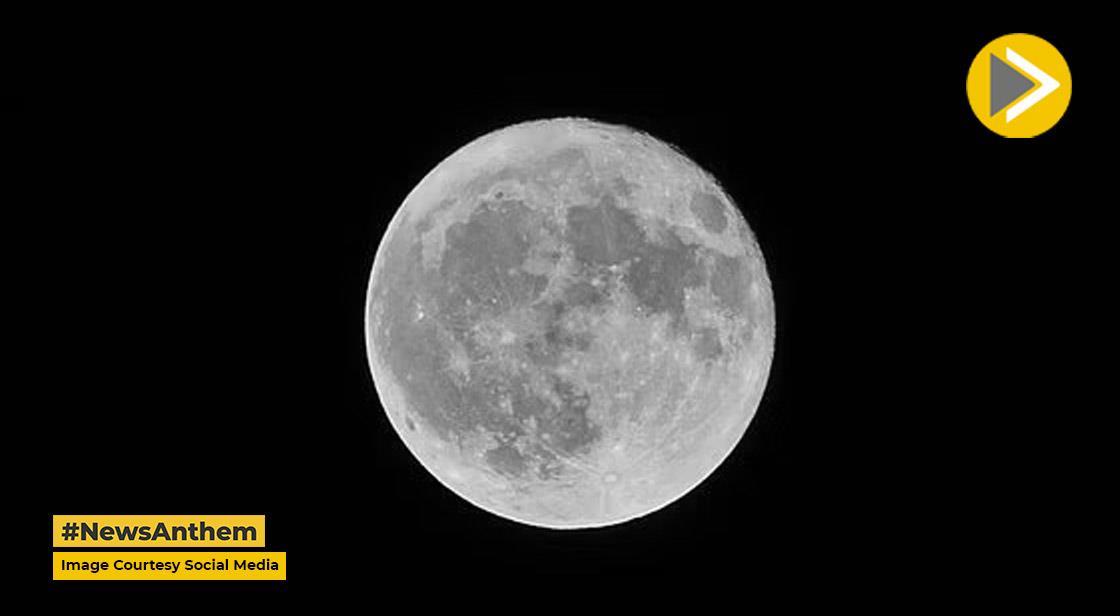
The Moon’s nearside, which permanently faces Earth, hosts vast mare—plains formed from volcanic lava that solidified billions of years ago. In contrast, the farside features rugged terrain with far fewer plains.
“The moon’s nearside and farside look very different, as shown by differences in topography, crustal thickness, and the amount of heat-producing elements inside,”
— Ryan Park
Researchers believe intense ancient volcanic activity on the nearside led to the accumulation of heat-producing radioactive elements like thorium and titanium, resulting in higher temperatures.
How Much Warmer Is the Moon’s Nearside?
The study estimates that the nearside mantle is between 180-360°F (100-200°C) hotter than the farside. This thermal difference is thought to be maintained by radioactive decay occurring within the mantle.
Gravity Mapping Enables Future Moon Missions
“This enhanced gravity map is a critical foundation for developing lunar Positioning, Navigation and Timing (PNT) systems, which are essential for the success of future lunar exploration missions,”
— Ryan Park
By improving our understanding of the Moon’s internal structure, scientists aim to build accurate lunar navigation systems to support Artemis missions and other future lunar explorations.
A Glimpse into Planetary Evolution
“The fact that the detected asymmetry in the mantle matches the pattern of the surface geology – for instance, differences in the abundance of the approximately 3-4 billion-year-old mare basalts (volcanic rock) between the nearside and the farside – suggests that processes which drove ancient lunar volcanism are active today,”
— Alex Berne, Caltech planetary scientist and GRAIL study co-author
The mantle, which lies beneath the Moon’s crust and above the core, spans about 22 to 870 miles (35 to 1,400 km) deep and makes up nearly 80% of the Moon’s mass. Composed of minerals like olivine and pyroxene, it is similar to Earth’s mantle in composition.
Why Understanding the Moon Matters
“The moon plays a vital role in stabilizing Earth’s rotation and generating ocean tides, which influence natural systems and daily rhythms,”
— Ryan Park
Despite decades of exploration, scientists continue to uncover new aspects of the Moon's structure. This study not only advances our lunar knowledge but also demonstrates how gravitational data can aid investigations of other celestial bodies such as Saturn’s Enceladus and Jupiter’s Ganymede—both key targets in the search for extraterrestrial life.
Conclusion
The recent revelations from NASA's GRAIL mission have significantly deepened our understanding of the Moon's internal structure and thermal dynamics. The discovery that the nearside of the Moon is consistently warmer than the farside — by an estimated 100–200°C — offers compelling evidence of ancient volcanic activity that continues to influence its subsurface characteristics today.
This asymmetry in the lunar mantle, enriched by heat-producing radioactive elements like thorium and titanium, aligns with the visible differences in surface geology between the two sides.
Beyond the academic implications, the enhanced gravity map developed from the GRAIL data lays the foundation for precise lunar navigation systems, critical for upcoming space missions.
Moreover, the methodology used to analyze the Moon’s gravity can now be applied to other celestial bodies, such as Enceladus or Ganymede, furthering the quest to understand potentially habitable environments beyond Earth. As the Moon remains central to exploration, studies like these are vital for future discoveries.
You May Like