ISRO's 100th Launch: GSLV-F15 to Deploy NVS-02 Satellite
News Synopsis
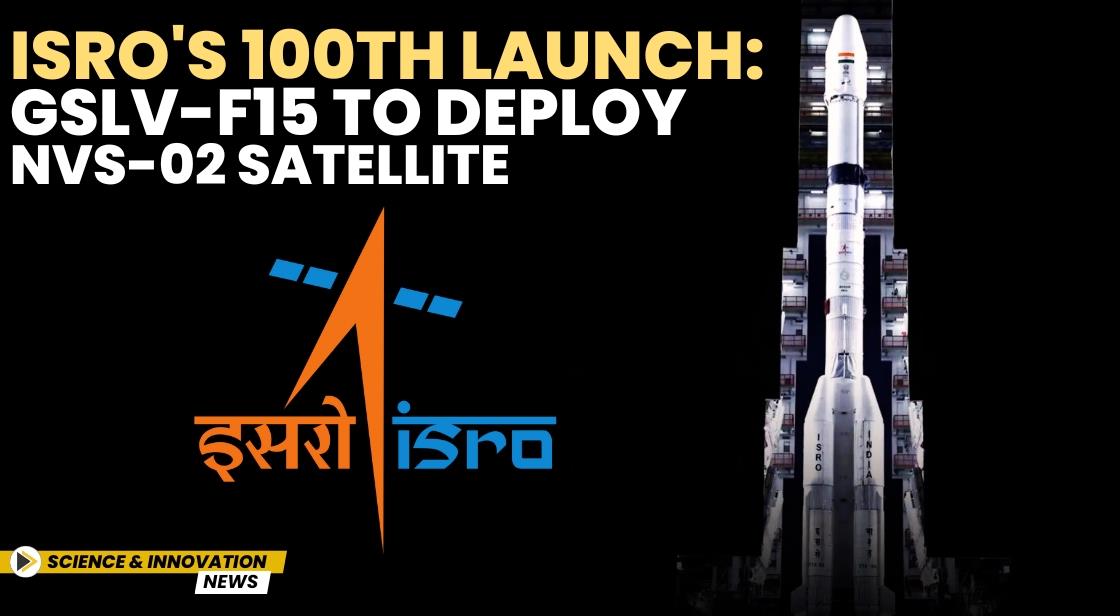
The Indian Space Research Organisation (ISRO) is gearing up for a significant milestone with the launch of its 100th mission. The upcoming launch will take place from Sriharikota, where ISRO will send the NVS-02 satellite into space. This mission is a key part of India’s ambitious Navigation with Indian Constellation (NavIC) system. The NVS-02 satellite is the second satellite in the series, and its successful deployment will strengthen India’s regional satellite navigation capabilities.
Launch Details: GSLV-F15 and Satish Dhawan Space Centre
The NVS-02 satellite will be launched aboard the powerful Geosynchronous Satellite Launch Vehicle (GSLV) from the second launch pad at the Satish Dhawan Space Centre in Sriharikota. This launch will mark the 17th flight of the GSLV rocket from the Indian spaceport. The GSLV-F15 rocket is designed to carry heavier payloads and has a proven track record of delivering satellites into geostationary orbits.
What is NavIC and Why is NVS-02 Important?
NavIC is India’s homegrown regional navigation satellite system, developed to offer accurate positioning, velocity, and timing (PVT) services within India and up to 1,500 kilometers beyond its borders. The NavIC system is similar to other global navigation systems like GPS (USA), GLONASS (Russia), and Galileo (Europe) but specifically caters to Indian requirements, offering better precision for Indian users.
The NVS-02 satellite is the second in the new generation of NavIC satellites. This new generation is designed to improve the system’s performance, extending its accuracy and reliability across various applications such as navigation, precision agriculture, emergency services, fleet management, and mobile device location services. With NVS-02, the NavIC network will see enhanced coverage and robustness, helping millions of users who rely on it for critical services.
NVS-02: Key Functions and Applications
NVS-02’s primary function is to improve the precision and reliability of India’s regional navigation system. The satellite will play a crucial role in bolstering NavIC’s offerings, ensuring that users experience better accuracy in their navigation data. This will benefit sectors like agriculture, where precise location data is essential for resource management, as well as the transportation industry, where fleet tracking and route optimization are critical.
Additionally, emergency services can rely on NavIC for accurate timing and positioning, which is vital for operations like search and rescue missions. The satellite’s advanced technology will also make mobile device location services more accurate, ensuring users can find their way with greater precision.
Deployment of NVS-02: Geosynchronous Transfer Orbit (GTO)
NVS-02 will be placed in a Geosynchronous Transfer Orbit (GTO) during launch. A GTO is an elliptical orbit where the satellite's perigee (closest point to Earth) is approximately 200 kilometers, and the apogee (farthest point from Earth) is around 36,000 kilometers. This highly elliptical orbit allows the satellite to achieve the necessary speed and altitude to eventually be placed in a geostationary orbit.
Satellites placed in GTO are initially positioned in a temporary elliptical orbit. Once deployed, they use their onboard propulsion systems to adjust and move into a circular geostationary orbit at about 35,786 kilometers above the Earth’s equator. A satellite in a geostationary orbit remains stationary relative to a specific point on Earth’s surface, which is crucial for communication and weather monitoring.
Conclusion: Strengthening India’s Position in Space Exploration
ISRO’s 100th launch and the deployment of the NVS-02 satellite represent an important step forward in India’s space exploration efforts. With enhanced capabilities, the NavIC system will offer Indian users more reliable navigation services, contributing to India’s technological advancement. As India continues to make strides in space research and satellite technology, this mission is a testament to ISRO's growing expertise and leadership in space exploration. The NVS-02 satellite is just one of many steps in India’s ongoing space journey, and it sets the stage for even greater achievements in the future.
You May Like