Federal Reserve Cuts Rates by 25 Points, Powell Eyes Gradual Economic Strategy
News Synopsis
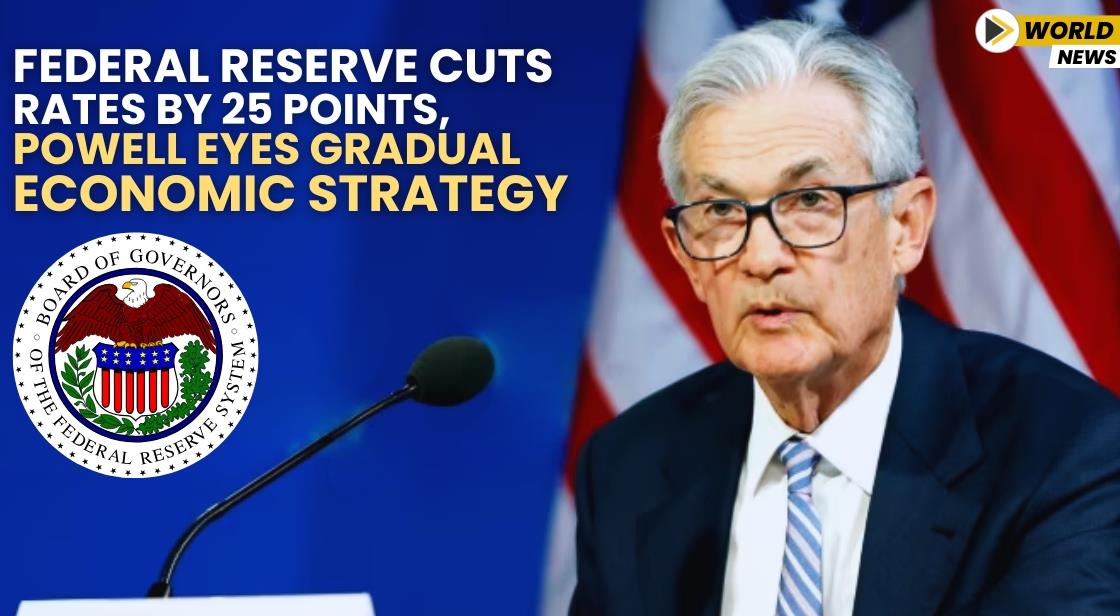
The U.S. Federal Reserve recently reduced interest rates by 25 basis points, marking a strategic response to the evolving economic landscape. As economic and fiscal uncertainties loom with a new administration set to take office, Fed Chair Jerome Powell outlined a cautiously paced approach to any further adjustments.
On Thursday, Powell indicated that the results of Tuesday’s presidential election would not have an “immediate impact” on current U.S. monetary policy. However, he underscored that the Fed is prepared to evaluate upcoming policies for their potential effects on inflation and employment.
Powell reaffirmed that despite the economic proposals introduced, such as changes in immigration policy, tariffs, and tax strategies, the Fed’s priority remains its dual mandate: achieving stable inflation near the 2% target and maximizing employment levels.
"It’s a process that takes some time," said Powell during the press conference following the Fed’s decision to reduce the benchmark interest rate to the 4.50%-4.75% range. As the Fed enters this recalibration phase, Powell underscored the importance of "continuing to review data" and "taking measured steps" to ensure economic stability while maintaining strong job growth and inflation control.
The U.S. Federal Reserve’s recent 25 basis point interest rate reduction to a range of 4.50% - 4.75% is a preemptive step, aligning with the central bank’s ongoing commitment to gradual easing after the aggressive rate hikes in 2022 and 2023. Fed Chair Powell assured that these adjustments aim to guide inflation back to its 2% target while supporting a healthy labor market.
Fed’s Monetary Approach Amid Political Changes
Fed Chair Jerome Powell made clear that the central bank’s monetary strategy will continue independent of recent election results. While policies from the new administration could influence broader economic conditions, Powell clarified that “no immediate impact” is expected on monetary policy. However, the Fed will assess any policy shifts, such as tax and tariff changes, which could affect inflation and employment.
Maintaining a “Very Good Place” for the U.S. Economy
During the press conference, Powell highlighted that “the economy, and we think our policies, are both in a very good place.” This cautious yet optimistic outlook reflects a Fed ready to navigate potential fiscal changes while maintaining stability in inflation and employment.
Key Federal Reserve Strategies Moving Forward
Future Rate Adjustments and Economic Indicators
Despite the current reduction, the Fed’s data-driven approach remains central. Powell stressed that future rate cuts would be gradual, guided by data on inflation and employment. The statement reiterated that the Fed’s goal is to maintain a “neutral” stance, where the economy is neither overly stimulated nor restricted.
Preparing for Fiscal Policy Impacts
Powell acknowledged the potential impacts of new fiscal policies under the upcoming administration, especially with Republican control of both the Senate and potentially the House of Representatives. Rapid changes in tax and fiscal policy could influence inflation targets and labor market conditions, prompting Fed reassessments.
Insights from Financial Experts on the Fed’s Strategy
Market analysts expect the Fed’s cautious trajectory to continue, with projections for another quarter-percentage-point cut in December. Elyse Ausenbaugh, head of investment strategy at J.P. Morgan, noted, “The easy cuts have been made, and maybe December won’t be too contentious either.”
Monitoring Inflation and Employment Targets
With inflation indicators nearing the Fed's target, Powell’s assurance that the “progress may be bumpy” suggests a commitment to sustainable measures that maintain stability. For instance, recent reports show core inflation at 2.6% annually, indicating a steady downward trend that may support Powell’s optimism for a stable economy.
Conclusion
The Federal Reserve's recent rate cut highlights a balanced approach to navigating economic uncertainties. With a new administration poised to introduce fiscal changes, Chair Jerome Powell emphasized that the Fed will remain vigilant and data-driven, ensuring that inflation and employment goals remain stable. Powell’s comments indicate that the Fed’s future actions will be carefully calibrated to maintain economic momentum without overstimulating or restraining growth.
As markets and policymakers await more clarity on potential fiscal adjustments, the Fed's strategy to proceed gradually provides assurance of stability amid political and economic shifts. This measured outlook suggests that the Fed remains committed to a cautiously optimistic approach as it addresses emerging challenges and aims for a “very good place” for the U.S. economy.
You May Like