Sam Altman: AI could replace 40% of jobs, superintelligence possible by 2030
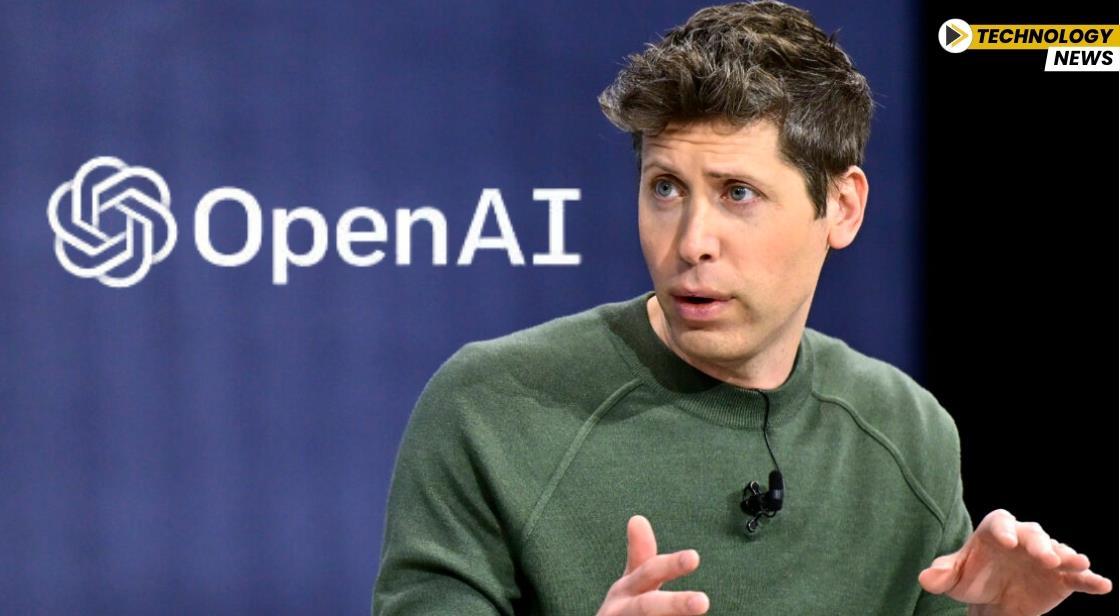
News Synopsis
Artificial Intelligence (AI) is moving at a pace that has even its creators sounding both excited and cautious. OpenAI CEO Sam Altman, one of the most influential voices in the AI space, has once again stirred debate by predicting massive transformations in how humans live and work.
Speaking after receiving the Axel Springer Award 2025, Altman said AI may soon not only replace a large share of human jobs but also surpass human intelligence.
“In many ways, GPT-5 is already smarter than me, and I think a lot of other people too,” Altman remarked, pointing to the exponential progress of machine learning. While current models still struggle with tasks that humans find simple, he emphasised that the technology’s trajectory is “extremely steep.”
AI on the Path to Superintelligence
OpenAI CEO Sam Altman suggested that AI could soon make breakthroughs previously impossible for humans alone.
“In another couple of years, it will become very plausible for AI to make, for example, scientific discoveries that humans cannot make on their own. To me, that'll start to feel like something we could properly call superintelligence.”
He went further with a striking timeline:
“By the end of this decade, by 2030, if we don't have extraordinarily capable models that do things that we ourselves cannot do, I'd be very surprised.”
The Jobs Question
Will AI replace human work?
Altman acknowledged that mass layoffs could result as automation accelerates. However, he framed the shift as task-based rather than wholesale job elimination.
“I can easily imagine a world where 30 to 40 per cent of the tasks that happen in the economy today get done by AI in the not very distant future.”
-
Entire categories of jobs may vanish.
-
Entirely new professions will emerge, demanding adaptability, creativity, and resilience.
-
The most valuable human skill, Altman said, will be “the meta-skill of learning how to learn.”
Optimism Amid Fears
Despite concerns about AI displacing humans, Altman rejected the darker predictions of humanity being reduced to insignificance. He recalled cofounder Ilya Sutskever’s hope that AGI might treat humans “like a loving parent.”
Altman’s view was pragmatic:
“Even if it has no intentionality, asking it to do something could have consequences we don't understand. So, it is very important that we align it with human values. I don't think it'll treat humans like ants.”
OpenAI’s Hardware Ambitions
The OpenAI chief revealed that the company is also working on hardware products. After hiring a former Apple designer, OpenAI is developing a “small family of devices” that could redefine personal computing.
“It will be good-looking,” he teased, describing a future where users rely less on apps and notifications and more on AI systems capable of handling tasks end-to-end.
Altman called this shift the third great computing revolution after the keyboard-mouse era and the touchscreen boom.
AI in Daily Life: From Parenting to Politics
As a new parent himself, Altman reflected on preparing the next generation for an AI-saturated future. He stressed the importance of adaptability, resilience, and creativity as core skills.
On governance, Altman predicted that world leaders will increasingly use AI for decision-making, though humans will continue to make the final calls.
While joking that he doesn’t trust AI for relationship advice, he did not dismiss its growing role in nearly every other domain. “AI will soon be at the centre of every table,” he said.
Conclusion
Sam Altman’s remarks underscore both the promise and perils of AI. If his predictions hold true, the world could see up to 40% of tasks automated and the dawn of superintelligence by 2030. While disruption to jobs seems inevitable, Altman believes humans will remain central to the story—provided we adapt, stay creative, and ensure AI aligns with human values.
The next few years, he suggested, may be the most transformative period in human history, redefining industries, societies, and daily life.
You May Like